
Drywall Water Damage Repair Southern Highlands, NV
Presto Water Damage provides drywall water damage repair in Southern Highlands and nearby Southern Nevada communities. Wet drywall can stain, soften, swell, lose strength, or hold moisture inside a wall cavity after a leak. Southern Highlands homes often include tile floors, large bathrooms, upstairs plumbing, finished garages, and modern wall systems where a leak can affect several materials at once.
Drywall Water Damage Repair Southern Highlands: Start with Assessment
Drywall water damage repair Southern Highlands projects should begin with the condition of the wall or ceiling, not a paint selection. The repair plan needs to establish what became wet, whether the source is controlled and which materials can be retained. A surface stain can be only one part of the affected assembly. Presto Water Damage can discuss the cleanup, drying and finish work as connected stages of the same project.
From a dry, safe position, describe the affected room, when the change was discovered and whether water is still appearing. Photograph the wider area as well as the visible boundary. Tell the team about earlier leaks or repairs without guessing when a hidden release began. Do not press on softened boards, disturb suspicious material or approach sagging ceilings to obtain a closer photograph.
Is Drywall Ruined If It Gets Wet?
Not every wet drywall section has the same outcome. A qualified assessment considers material condition, water contact history, contamination concerns and access for drying. Softness, crumbling edges, separation or loss of strength can influence the repair decision. An apparently intact painted surface does not establish the condition of the board, insulation or framing behind it.
A stain alone does not identify the source or prove that removal is required. Conversely, an area that looks normal can still need evaluation when the water path reached a concealed cavity. Ask which observations support the proposed work and what remains inaccessible. The written explanation should identify limitations instead of treating an uninspected space as confirmed dry.
Identify the Source and Exposure History
Ask the appropriate qualified provider to establish why water reached the assembly. Plumbing, appliances and roof-related openings require source-specific investigation. Source correction is separate from drywall repairs: a repaired pipe does not dry the wall, and a newly finished wall does not correct an unresolved pipe leak. Keep the repair record and restoration findings together.
Report anything the water contacted, including stored products, dirty surfaces or a suspected contaminated source. Do not assume that every release can be handled with household fans. If electricity, unstable finishes or suspected contamination affect access, the work must account for those conditions before inspection or drying begins.
Wet Drywall: Retain or Replace?
Can wet drywall be saved? Sometimes, when its condition, exposure and access support retention and drying can be verified. Other sections may need removal because of deterioration, contamination concerns, affected insulation or inaccessible moisture. Ask why each boundary was selected. Retention and removal decisions should be tied to the actual findings rather than a universal rule for every stain.
Fixing wet drywall involves more than making the face look smooth. If the board is retained, the plan should explain how the relevant layers will be evaluated during drying. If removal is proposed, ask what the opening is intended to access and how surrounding finishes will be protected. Homeowners should not dismantle the assembly to test a recommendation.
Check Insulation, Framing and Adjoining Finishes
Water may reach insulation, framing, wall bases, cabinets or flooring beside the first visible mark. Each material needs its own assessment. The condition of the drywall face does not settle the condition of a concealed layer. Ask whether adjoining rooms or the opposite side of the wall were included and where the inspected boundary ends.
Use identifiable inspection locations so follow-up readings can be compared. Instruments need material-specific interpretation; metal and installation details can influence some readings. Our guide to moisture meter readings provides useful questions for discussing the assessment. A single unexplained number does not establish the cause, duration or complete repair scope.
Plan Drying Around the Actual Assembly
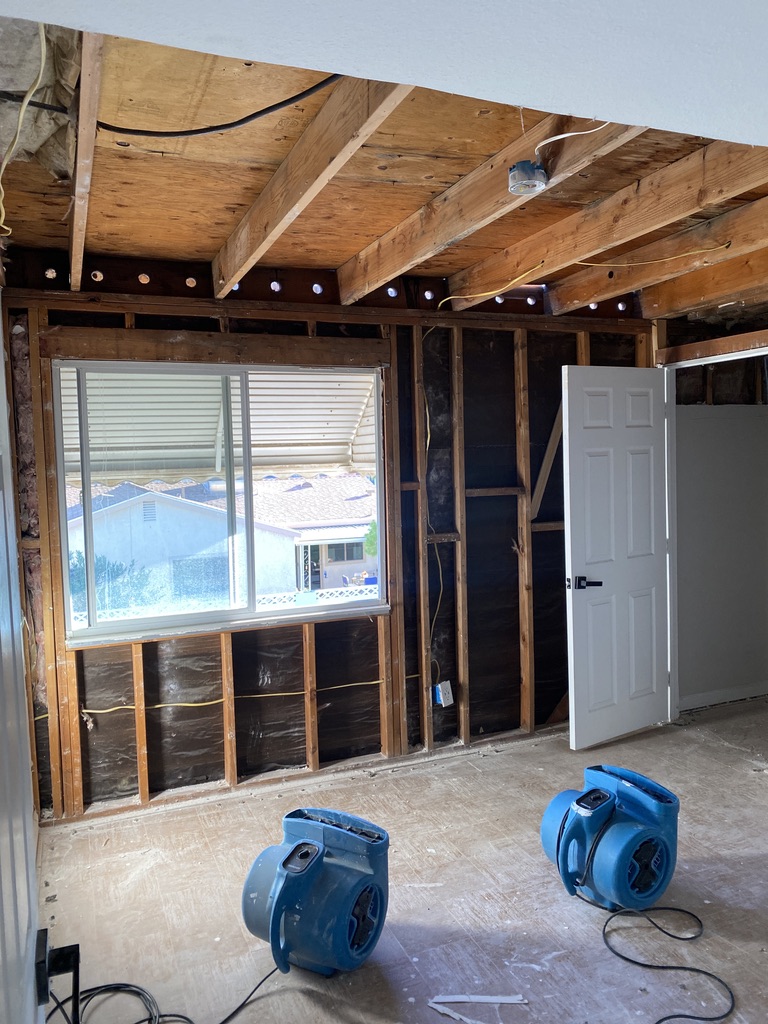
When wet drywall is selected for retention, the drying plan must account for access, the assembly and the surrounding environment. Extraction removes accessible water; drying addresses moisture in materials. Ask why equipment is placed in particular locations, which retained materials are being monitored and how protected work areas will remain accessible to the team.
There is no reliable single drying deadline for every property. Material type, affected layers and the ability to inspect concealed areas influence the work. Equipment operating time alone does not demonstrate completion. Ask how changes in readings, material condition and access affect the drying plan and whether any unresolved area needs further investigation.
Verify Conditions Before Closing the Wall
Before wet drywall is covered or replaced, review the source status, drying findings and any remaining limitations. A new board or coat of paint should not conceal an unresolved moisture concern. The team should explain what is ready for the next stage and which parts of the scope remain conditional on additional inspection or source work.
The EPA guide to moisture and mold explains the importance of correcting moisture problems and drying affected materials. Report suspected growth before disturbing finishes. Moisture findings, cleanup decisions and finish repairs are related, but one should not be used as a substitute for the others.
Coordinate Texture, Paint and Finish Transitions
Once the relevant conditions support rebuilding, drywall water damage repair Southern Highlands work may include insulation, board installation, joints, texture, primer, paint and adjoining trim. Confirm what is included at transitions to undamaged finishes. Matching a texture or paint appearance is a finish decision; it does not establish that the concealed assembly was dry.
Discuss cabinet edges, baseboards, flooring and fixture access before selections are finalized. Ask whether the estimate includes the affected surface alone or a wider finishing area, and why. Keep optional upgrades separate from restoration work. If access reveals additional damage, request an updated explanation of the scope instead of assuming the original quantities cover every newly exposed condition.
Keep an Organized Project Record
Keep discovery photographs, source-repair records, material decisions and drying reports in one project file. Identify the affected rooms and the dates providers attended. If wet drywall or other material is removed, ask for photographs and the reason for removal. Do not delay necessary mitigation solely to collect a perfect set of pictures.
If insurance may be involved, follow the insurer’s reporting process and ask which records it needs. Restoration records describe findings and work; they do not guarantee coverage or claim acceptance. Keep contents information separate from building finishes, and identify the contact who should receive scope changes or progress updates.
Plan Access in Occupied Properties
For a home, rental or commercial property, explain who can authorize access and whether the room is occupied. Discuss protection for belongings, work routes and equipment before the visit. Do not move operating drying equipment or disturb protected areas without coordinating with the team. Changes can affect both access and the work being monitored.
For tenants and property managers, clarify who approves removal and finish selections. Drywall water damage repair Southern Highlands planning is easier when the occupant, owner and site contact receive the same information. Keep source-repair responsibilities separate from mitigation and reconstruction so a completed task is not mistaken for completion of the whole loss.
Questions Before Approving Repairs
Does a dry-looking wall need inspection? It may, particularly when the earlier water path reached the assembly. Surface appearance cannot describe every concealed layer. Explain what happened even when the visible water has stopped.
Will wet drywall always need replacement? No single answer fits every loss. Condition, exposure, access and verification guide the decision. Ask for the reason behind the recommendation and the limits of the inspected area.
Can finishing begin as soon as fans are removed? Review the drying findings and source status first. Equipment removal, finish preparation and final completion are separate decisions that should be explained in the scope.
Request Drywall Water Damage Repair Southern Highlands Help
For drywall water damage repair Southern Highlands inquiries, tell us which rooms are affected, whether water is active and what work has already occurred. Safe photographs and available source-repair records can help explain the situation. Presto Water Damage can discuss the practical next stage without requiring you to diagnose the concealed assembly.
Explore our water damage services, extraction, structural drying, mold remediation and reconstruction. View the project gallery or contact us at 725-529-5195. The photograph illustrates restoration work and does not establish the scope at a particular property.
Before the visit, prepare a short list of access and finish questions. Identify which doors, fixtures or stored belongings could affect inspection, and explain whether earlier work has changed the wall. Keep any existing repair estimates available for comparison. For wet drywall work, an organized handoff helps the team distinguish confirmed findings from assumptions and helps you understand what still requires a decision before rebuilding.
Review the work sequence before approving the estimate
A useful estimate should make the next decision understandable. Ask which findings are confirmed, which quantities are provisional and what could change after access is available. The document should distinguish inspection, removal, drying, rebuilding and finish work. If several providers are involved, identify their separate responsibilities so a completed source repair is not confused with a completed restoration project.
Review room names and affected boundaries together. A wall description should be clear enough that the owner and contractor are discussing the same location. Ask how adjoining trim, cabinet edges and flooring transitions are treated in the proposed scope. If an area is excluded because it was inaccessible, keep that limitation visible in the project record rather than assuming it was inspected.
Access openings should have a stated purpose. The reason may relate to material condition, concealed layers or the ability to verify drying. Ask what the opening is intended to establish and how the surrounding area will be protected. If the findings change once access is created, request an updated explanation before treating the original removal boundary as a final decision.
For drywall water damage repair Southern Highlands, compare source-related work with the building-material scope. A plumber, appliance technician or roofing provider may address a cause while restoration staff evaluate the affected assembly. Keep their reports available to each other when appropriate. A clear handoff helps explain whether the project can move forward or whether a source question remains unresolved.
Ask how drying findings will be communicated. The record should identify the materials being monitored, the relevant locations and any limitations on access. A list of equipment alone does not explain why an assembly is ready to close. Request a practical explanation of the progress being tracked and the basis for moving from mitigation into reconstruction.
If there are several estimates, compare the work described rather than totals alone. Different access assumptions, material quantities or finish boundaries can produce different prices. Ask which items are included, conditional or excluded. Keep optional improvements separate so you can understand the restoration work and make deliberate decisions about any additional changes you choose.
Coordinate access, contents and decisions during the project
Identify the person who can authorize work and the person who provides entry. In a managed property, these may be different people. Clarify how each will receive progress updates and proposed changes. Keep the occupant informed about protected areas and access needs without asking them to move equipment, remove barriers or inspect concealed materials themselves.
Before work begins, discuss belongings near the affected area. Ask which items need protection or relocation and who will arrange it. Keep an inventory of anything moved as part of the project. Do not move suspected contaminated belongings merely to improve access; bring the concern to the team so the plan accounts for the actual conditions.
Review safe work routes and any restrictions on room use. Drying equipment, cords and protected areas can affect how occupants move through a space. Ask where access must remain available for monitoring and what to do if a route becomes obstructed. Changes to operating equipment should be coordinated with the team instead of being made to reduce noise or recover floor space.
For rentals, confirm who approves removal, finish selections and changes to the written scope. A tenant may be able to report conditions while the owner or manager authorizes building work. Keeping those roles clear reduces misunderstandings about what was requested, which decisions remain open and who should receive the next question from the restoration team.
Keep a simple chronology throughout drying and repairs. Record when water was discovered, when source work occurred, when inspection was possible and when the scope changed. Separate witnessed events from estimates or assumptions. The record does not need technical language to be useful; it needs consistent locations, dates and descriptions that can be understood later.
When a new stain, odor or change in material condition is noticed, report it without disturbing the area. Explain where it appeared and whether it differs from earlier photographs. The team can decide whether the change affects inspection, drying or the repair sequence. Do not assume a new observation has already been included simply because other work is underway nearby.
Prepare for the handoff to finish repairs and completion
Before board installation or finishing, review what is being retained and what is being replaced. Confirm that the relevant source and drying decisions are understood, along with any outstanding limitations. The purpose is to connect the next construction stage with the documented findings, rather than treating a schedule date or an empty room as the evidence that preparation is complete.
Discuss texture and paint expectations before the finishing stage. Existing finishes can vary across a room, so ask which surfaces are included and how transitions will be handled. Keep selections and agreed boundaries in writing. If wider painting or another cosmetic improvement is optional, identify it separately from the work required to repair the affected materials.
Review trim, cabinet and flooring interfaces with the repair scope. A drywall edge may meet several other finishes, and each transition may need a separate decision about removal, protection or matching. Ask who is responsible for fixtures or other items that must be moved for access. This makes the handoff clearer without assuming every adjacent item needs replacement.
At completion, compare the agreed scope with the finished areas and the available records. Ask about any unresolved source issue, access limitation or follow-up recommendation. Keep drying documentation and repair invoices together. A visual review is useful for finish work, while the earlier assessment and monitoring records explain the decisions that supported closing the assembly.
Keep the final records accessible after the project. If moisture appears again, report the location and timing and provide the earlier source and repair history. Recurrence requires evaluation of the current conditions; the appearance of the new mark alone does not establish whether it has the same cause. Clear records help the next provider understand what was previously inspected and completed.