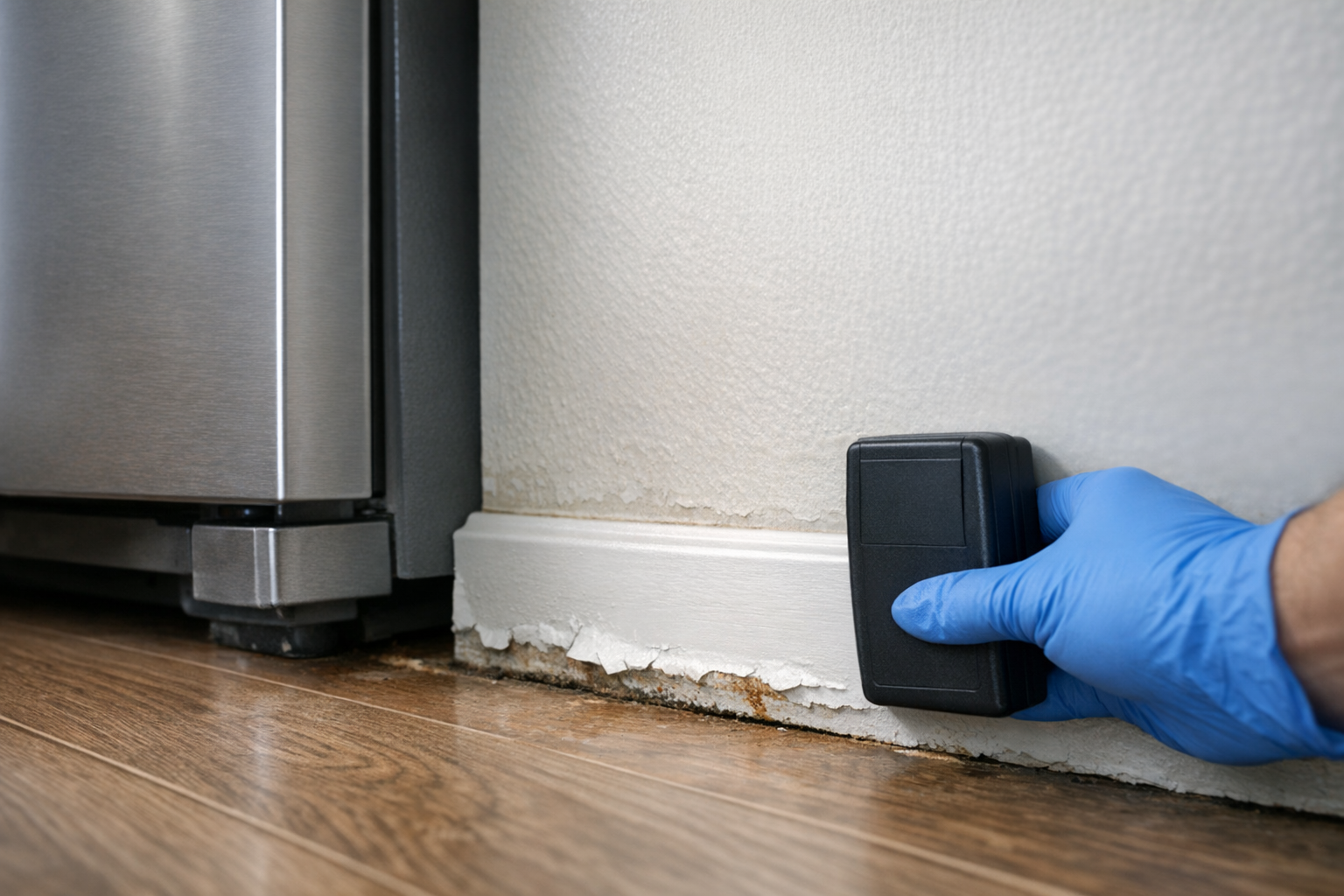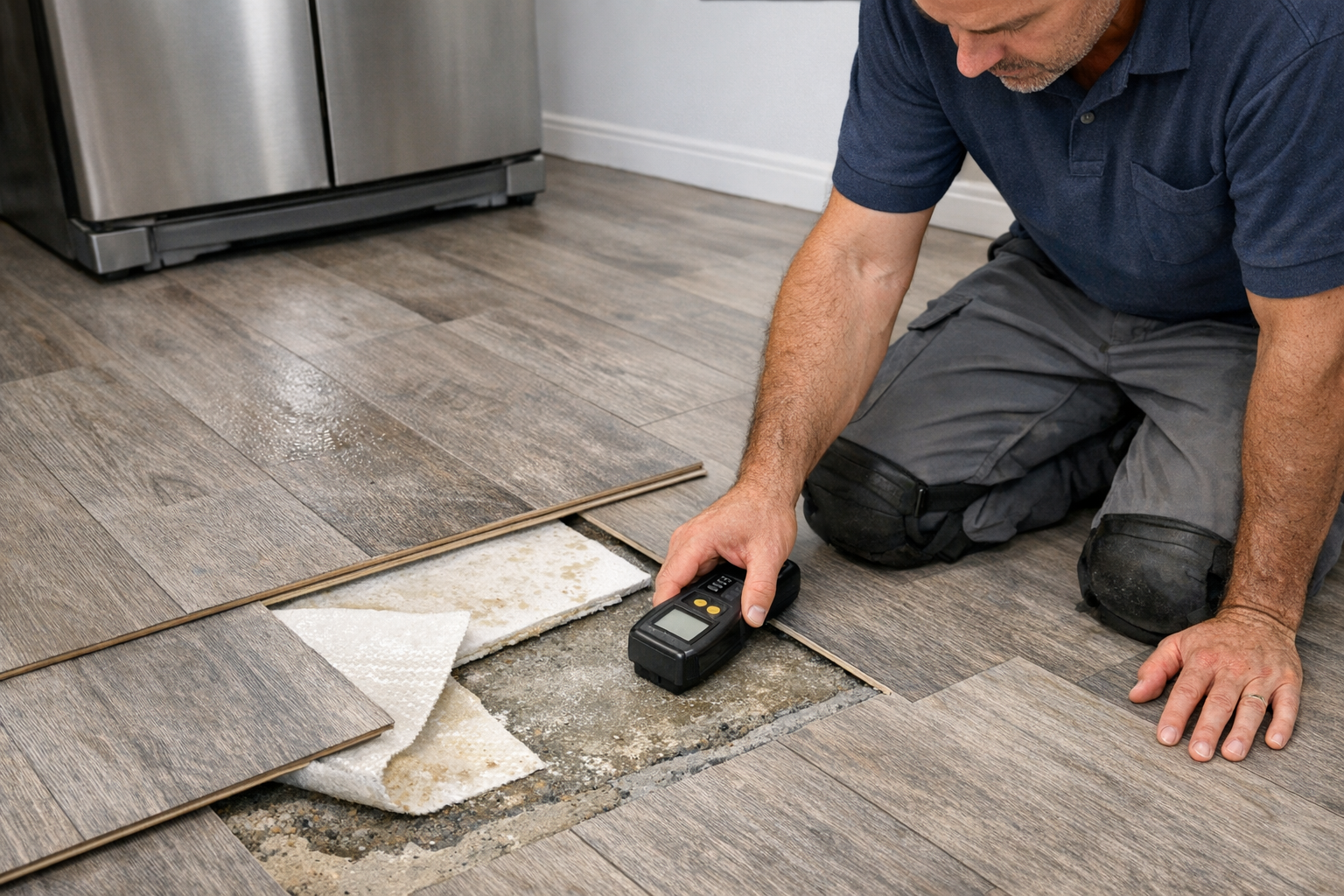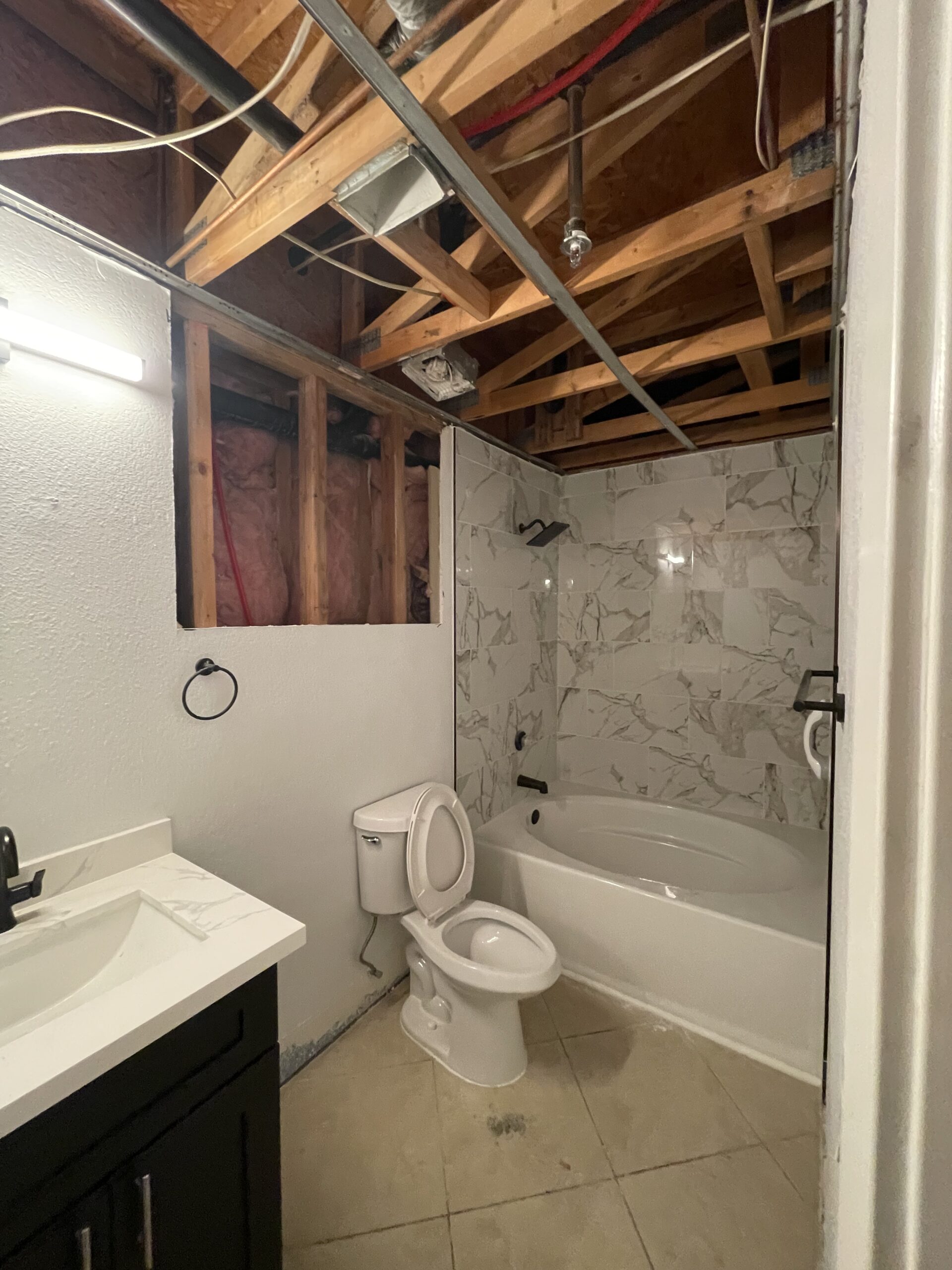
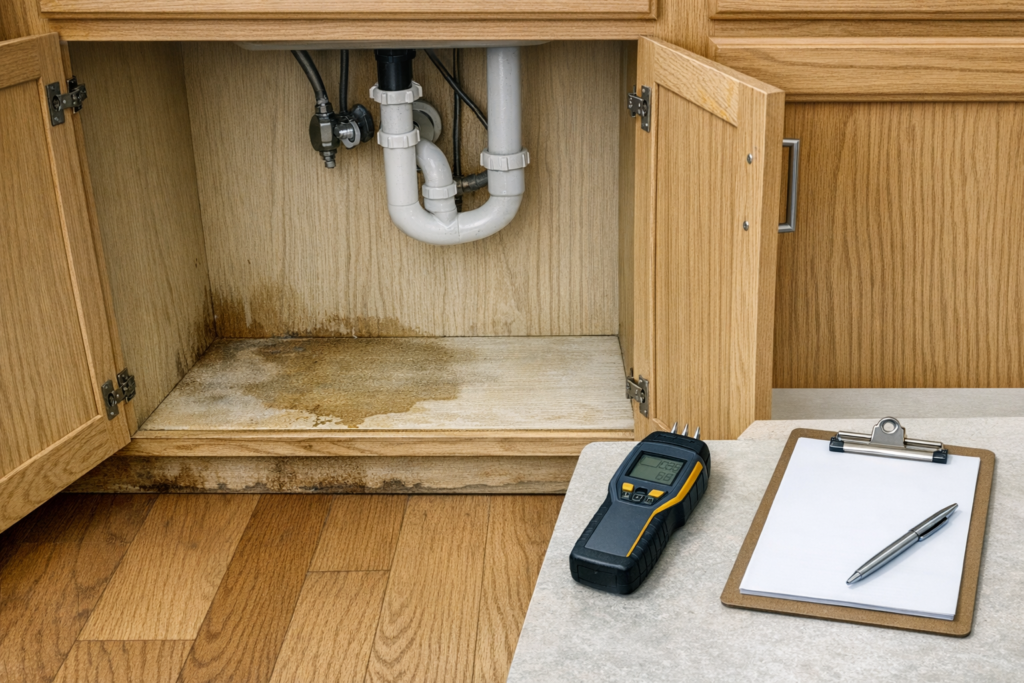
Moisture mapping after a cabinet leak helps organize the assessment, drying records, and repair discussion. This Las Vegas guide explains seven essential checks without treating a dry-looking surface as proof that concealed materials are ready for rebuilding.
On this page
What is moisture mapping?
Moisture mapping connects observations and readings with identifiable locations and materials. After a cabinet leak, the record may address a cabinet base, toe kick, adjoining wall, or floor edge. It should distinguish visible damage, measurement findings, and areas that remain inaccessible. It does not replace source investigation or prove that every concealed layer is dry.
Start with safe access and the source-repair status. Describe the discovery timeline and the affected room. Our structural drying service explains how assessment supports the drying plan.
Connect readings with comparable materials
A number needs context: ask which material was tested, where the reading was taken, and what comparison helps interpret it. Instrument type, depth, and different assemblies affect meaning. A photograph of a meter alone may not explain the finding.
Separate source control from assessment
Tell the restoration contact whether water is still entering and who handled the source correction. A repaired connection answers a different question from the condition of materials already contacted. Water extraction may be needed before further assessment when recoverable water remains.
Do not enter standing water, test wet electrical equipment, or open cavities yourself. Describe unsafe or restricted access instead of trying to complete an inspection.
Follow the actual event
Share confirmed information about appliance leaks or pipe-related damage. Keep a suspected cause separate from a verified repair. The arrangement of rooms and materials should guide the assessment boundary, not an assumption that every cabinet leak needs identical work.
Use moisture mapping findings to define the scope
Ask which adjoining materials were evaluated and what remains uncertain. If access is proposed, ask what it would establish and how the boundary was selected. Moisture mapping should connect evidence with the recommendation, rather than present removal as an automatic response to any stain.
Potential cleaning or contamination concerns need their own review. The mold remediation service addresses another possible restoration category; its relevance depends on actual findings.
Evaluate components separately
Cabinet panels, drywall, insulation, trim, and flooring can respond differently to the same event. A surface may be deformed even after moisture decreases, while an unchanged finish can leave questions about hidden layers. Ask why each material is being retained, removed, or evaluated further.
Keep moisture mapping forms understandable
Ask how measurement points are labeled so later visits refer to the same locations. Photographs or sketches should connect room names, fixed landmarks, and material descriptions. Moisture mapping records become difficult to compare when location names change without explanation.
Record inaccessible areas as limitations. If a cabinet panel is removed or a floor edge becomes available, the next entry should show how the new access relates to the earlier observations.
Identify approvals and access contacts
For a rental or shared building, identify who can authorize work and arrange adjoining access. Do not infer responsibility from where a stain appears. Keep source-repair documents, assessment records, authorizations, and scope changes together while preserving the distinction between them.
Review drying progress before repairs
Moisture mapping supports consistent follow-up when retained materials remain under evaluation. Ask what findings support the next stage and what would prompt a change in access or equipment. Report new water or practical concerns to the project contact; avoid independently moving or adjusting restoration equipment.
Before repair and reconstruction, distinguish verification of retained materials from finish choices. A drywall repair scope should not silently substitute for unresolved drying questions.
Review the completion basis
Ask which materials were checked, what limitations remain, and what supports closing the assembly. Appearance, elapsed time, or removal of equipment alone does not explain readiness. For independent background, consult the EPA moisture and mold guide.
Retain the project documents
Keep the approved scope, photographs, progress records, source-repair information, and final review notes. Documentation explains observations and work; coverage and reimbursement remain decisions under the insurer’s policy review. Identify outstanding items and the appropriate follow-up contact.
Arrange moisture mapping services in Las Vegas
Review our restoration service directory and Las Vegas service area before discussing your property. We also serve Henderson and North Las Vegas. Explain the water history, affected rooms, access conditions, and work already performed.
Call 725-529-5195 to discuss the next assessment step. A property-specific scope is more useful than assuming a standard equipment package or removal decision fits every cabinet leak.