On this page
Wet baseboard assessment after a leak
A wet baseboard assessment connects the visible trim with the adjoining wall and floor. Swelling, stains, changed paint edges, or a new gap are observations to report, not proof of how far moisture traveled. For a Las Vegas 89101 property, start with the water history, safe access, and the source-repair status before deciding which materials need drying or replacement.
Damage on baseboards and adjacent finishes should be evaluated together without assuming every component needs the same treatment. A painted face can conceal MDF, wood, or another product. The material, water contact, physical condition, and inspection access all affect the recommendation. Ask the assessor to explain what was checked and what remains uncertain.
Signs of water-damaged baseboards
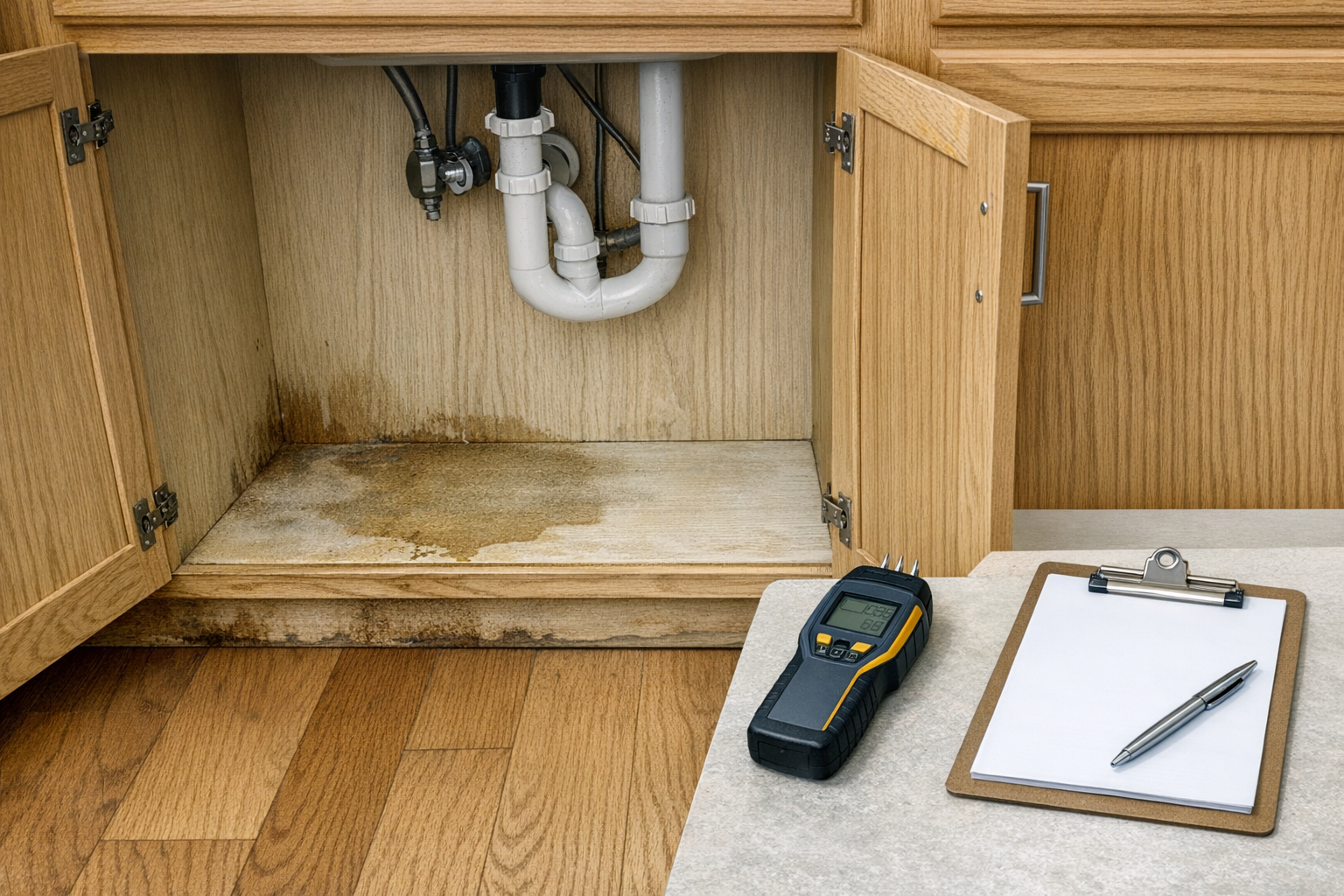
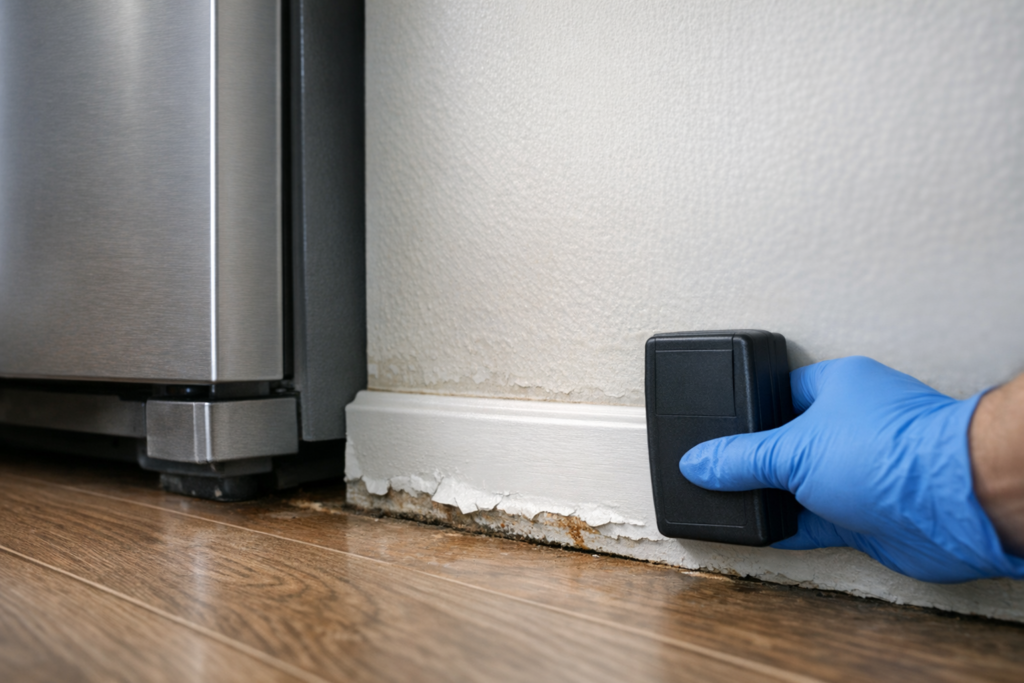
Record signs of water damage from a dry, stable location. Photograph new swelling, staining, separated joints, peeling finishes, or changed flooring edges. Include a wider view showing the wall and nearby features, then a closer view of the trim if that can be done safely. Label each observation by room and date.
Do not diagnose the cause from a photograph alone. Old stains can remain after a source stops, while a normal-looking surface does not establish that concealed layers are dry. Explain when the condition changed and whether similar concerns appear in an accessible adjoining room or closet.
Source history for a wet baseboard assessment
Say when water was discovered, where it first appeared, and who handled the source repair. Distinguish a suspected appliance or plumbing leak from a confirmed finding. A repaired connection stops a source; it does not verify the condition of the trim, wall edge, or flooring already contacted.
Tell the team about earlier leaks, recurring staining, recent finish repairs, or any uncertainty about duration. Keep those facts separate from assumptions about responsibility. If a tenant, neighboring unit, or property manager controls adjoining access, identify the appropriate contact before scheduling.
Make safe observations before the visit
Do not enter standing water, operate wet electrical equipment, or pry off baseboards to investigate. Keep away from sagging materials, unstable flooring, suspected contamination, and other unsafe conditions. Explain access concerns when calling so the initial discussion reflects the property as it is.
When recoverable water remains, ask about professional water extraction rather than treating surface cleanup as completion. Leave removal and invasive access to the agreed assessment plan. A photographic record is useful, but necessary safety and mitigation work should not wait for perfect pictures.
Wet baseboard assessment at the wall-floor junction
Water damage on baseboards may be visible at only one part of a connected assembly. The assessor may need to consider the lower drywall edge, floor transition, cabinet toe kick, and the opposite side of an accessible shared wall. Ask how the proposed boundary follows the observed conditions.
A swollen piece of trim does not prove every adjoining material needs replacement. Equally, replacing that trim alone does not resolve questions about materials behind it. Discuss wet drywall retention considerations separately from the trim decision. Record inaccessible areas instead of assuming they were unaffected.
Understand the findings and their limits
During a wet baseboard assessment, ask which material each reading represents, where it was taken, and what comparison helps interpret it. Some measurements are relative screening observations rather than a direct moisture percentage for every layer. Different materials and methods should not be treated as interchangeable.
A wet baseboard assessment record identifies locations and limitations as well as readings. If additional access is proposed, ask what information it would provide and how the opening boundary was selected. One unexplained meter photograph does not describe an entire wall-floor junction or establish readiness for repairs.
Separate trim replacement from access work
During a wet baseboard assessment, ask whether removal is recommended because the baseboard itself cannot be retained, because access is needed, or both. Those purposes can lead to different scopes. Composite trim may remain deformed after drying; other materials require their own condition and cleaning evaluation.
Do not assume a visibly similar piece of trim has the same composition or history as yours. Discuss existing finishes and material identification before ordering replacements. Leave evaluation of coatings and safe disturbance methods to the professionals responsible for that work.
Connect drying verification with repairs
A wet baseboard assessment should explain why equipment operation alone is not proof of completion. Ask how retained materials will be evaluated during structural drying and dehumidification. Consistent locations make progress easier to review. Report new water, changed staining, or equipment concerns to the project contact rather than adjusting the setup yourself.
Before reinstalling trim or closing a wall edge, ask what findings support the next stage and which limitations remain. There is no universal number of days or single reading that verifies every assembly. The repair scope should distinguish trim, drywall, flooring access, painting, and other authorized work.
Repair boundaries after a wet baseboard assessment
Provide available trim profiles, product information, paint details, and photographs from before the event. Existing finishes can age, and matching products may be discontinued. Ask whether the proposal covers an affected section, a whole wall, or another defined boundary.
Confirm who approves material selections and changes, especially in a rental or managed property. Discuss furniture, access routes, and occupied rooms before work starts. Clear responsibilities make the handoff easier without treating finish decisions as evidence that drying is complete. Our repair and reconstruction service explains the stage after mitigation. For example, a trim repair near a doorway may involve a transition to unaffected flooring, a matching paint boundary, and temporary furniture access. This is a planning example rather than a customer report. Ask how those connected tasks appear in the written scope and who will coordinate them. A clear work sequence helps avoid finishing a surface before another required task is complete.
Keep a clear completion record
After the wet baseboard assessment, keep source-repair documents, photographs, assessment notes, progress records, authorizations, and the final scope together. Compare the finished work with what was approved and identify outstanding items. Documentation can explain the event and restoration work, while policy coverage and reimbursement remain decisions for the insurer.
Arrange a wet baseboard assessment in Las Vegas
Presto Water Damage serves Las Vegas, Henderson, and North Las Vegas. Give the property location, affected rooms, discovery timeline, and safe-access conditions when requesting an assessment. Mention source work already performed and who can authorize adjoining access. Call 725-529-5195 to discuss the next step.
To reduce recurrence, follow the confirmed source and report renewed staining or swelling promptly. Do not simply cover changing trim with paint or caulk. For independent background, read the EPA guide to mold, moisture, and your home.