
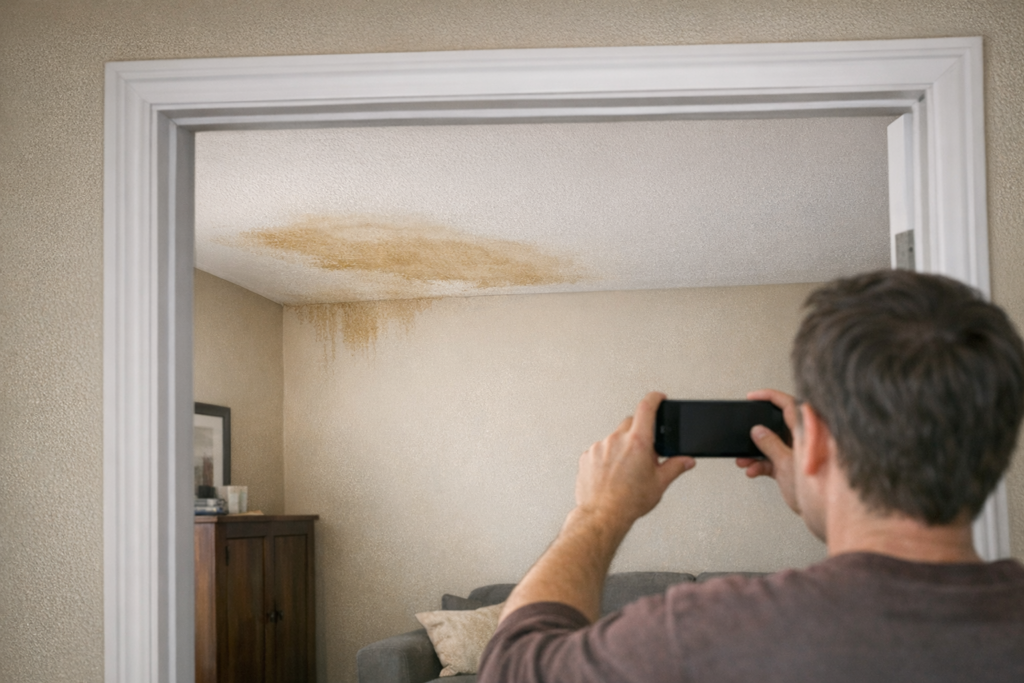
Upstairs leak documentation should connect the suspected source with the affected rooms below. Use this six-part guide to prepare for assessment, follow the drying record and review the repair scope.
On this page
1. Check safe access after an upstairs leak
An upstairs leak can leave ceiling water damage below while the source remains out of sight. For a Henderson 89002 property, begin with safe access and dated observations. Record what you saw, what another person reported, and what a professional has confirmed. A stain is useful evidence of appearance, but it does not establish the complete moisture boundary or identify who is responsible.
Keep people away from sagging drywall, falling material, active dripping near electrical fixtures, and unstable floors. Do not puncture a ceiling, remove a light, test switches, or enter standing water. Record ceiling water damage from a dry doorway if that is safe. An urgent protective response should not wait for perfect photographs. Notify the appropriate building contact when adjoining access or a shared supply is involved.
2. Document ceiling water damage on both levels
Pair the suspected source area upstairs with the affected room below. Water may travel along concealed materials before appearing at a ceiling. Label rooms consistently in photographs and notes. Include a wide view for location and a closer view of visible changes only when safely accessible. An upstairs leak record should identify inaccessible areas instead of assuming they are unaffected.
Record discovery time, the last observation without visible damage, and any known source work. If the start time is unknown, say so. Do not operate a fixture or appliance to reproduce the upstairs leak yourself. Ask the source-repair professional to document the confirmed component, repair and remaining limitations. Preserve original files and messages alongside the water damage documentation checklist.
An upstairs leak can affect contents as well as finishes. Photograph affected belongings in their original location when safe, then record their descriptions and visible condition. Do not invent purchase values or declare an item unsalvageable without evaluation. Keep contents records separate from the building repair estimate so each decision remains understandable.
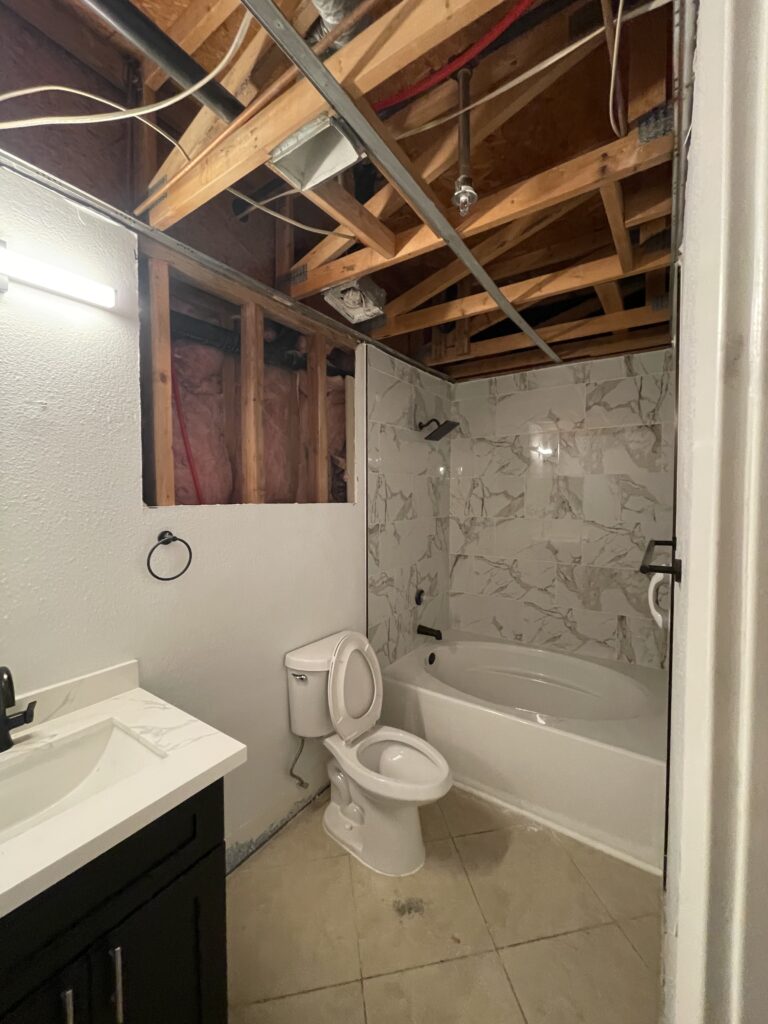
3. Ask how to fix ceiling water damage based on findings
Ask which materials lie between the upstairs floor and downstairs ceiling. Construction may include flooring, underlayment, subfloor, framing, insulation and drywall. Ceiling water damage assessment should identify which layers were evaluated, how measurements relate to those materials, and where access remains limited. A photograph or one unexplained meter reading cannot describe every concealed layer.
For an upstairs leak, request labeled locations that can be checked again during drying. Ask whether adjacent walls, floor edges and connected rooms were included. If an opening is proposed, clarify what it should reveal and who can authorize it. Leave exploratory cutting to the agreed professional work plan. Record the reason for a changed scope when concealed conditions become accessible.
4. Review repairing ceiling water damage separately from source work
Stopping an upstairs leak and restoring the affected assembly answer different questions. A repaired connection does not prove that insulation or ceiling drywall is dry. When fixing ceiling water damage, ask which materials can remain, which need removal, and what supports each decision. Material condition, water history and drying access should guide the explanation rather than the visible stain alone.
Ceiling water damage may require coordinated work on both levels. Retaining upstairs flooring can limit access below it; retaining the ceiling can limit access above it. Ask how those restrictions affect the plan. Do not press softened drywall to test its strength. Photograph authorized openings and retained materials before the work becomes concealed again.
Discuss finish repairs after the affected materials have been evaluated. Confirm the ceiling and wall boundaries, insulation work, trim, texture and painting included in the agreement. An upstairs leak does not automatically put every finish in the home within the repair scope. Separate optional improvements from restoration work and keep approved changes with the current estimate.
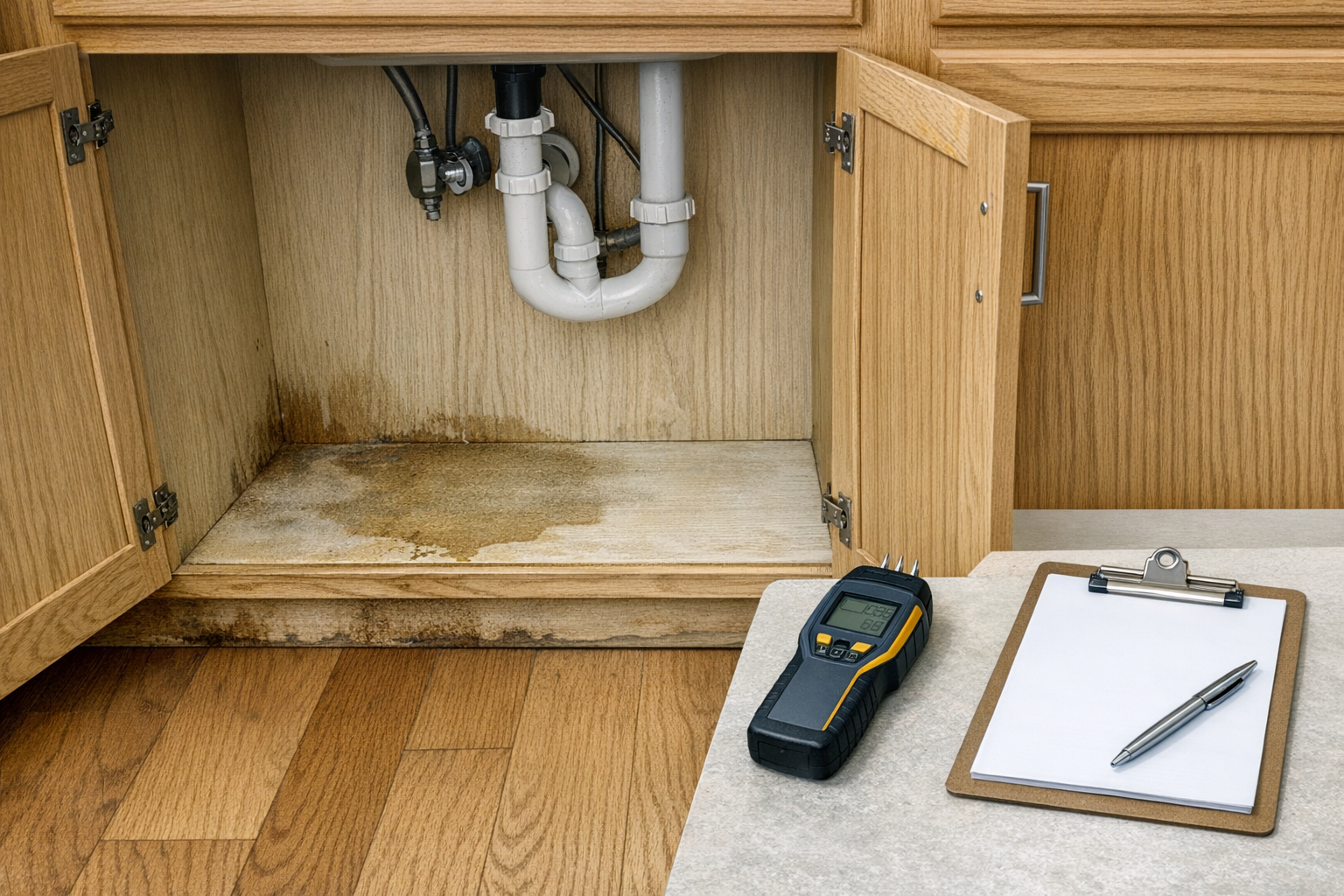
5. Track drying after an upstairs leak
Ask how the team will monitor ceiling water damage during structural drying and dehumidification. Consistent location labels make progress easier to review. Equipment operating in a room is not proof that the concealed assembly has met its drying goals. There is no universal completion time for every material and building arrangement.
Report renewed water, changed staining or equipment interruptions to the project contact. Follow the agreed equipment and access arrangements rather than moving machines yourself. For an upstairs leak involving separate occupants, identify who schedules entry and who approves additional work. A delayed inspection should be documented as a limitation, not recorded as evidence that the unavailable room was dry.
For independent background on moisture control, read the EPA guide to mold, moisture and your home. This general resource does not determine the condition of your property. Suspected contamination or growth needs appropriate evaluation; avoid disturbing affected materials or directing household fans across them.
6. Keep a clear upstairs leak completion record
Before closing openings, ask which retained materials met the documented drying goals and what limitations remain. Keep source findings, repair confirmation, assessment notes, monitoring records and reconstruction decisions together. Ceiling water damage documentation should explain the work actually performed without implying that uninspected areas were evaluated.
At the walkthrough, compare the completed repairs with the approved scope. Record outstanding items and the contact responsible for follow-up. Keep product and paint information for future maintenance. Report a returning stain or drip with its location and date; do not deliberately recreate the upstairs leak to test a repair.
If a claim is involved, ask the insurer which records and procedures apply. Photographs, estimates and invoices can explain ceiling water damage and restoration work, but they do not guarantee coverage. Preserve factual observations and clearly identify unknowns. Responsibility, policy coverage and restoration scope require separate review.
Presto Water Damage provides restoration support in Henderson, including the 89002 area. Call 725-529-5195 to discuss an upstairs leak, safe access and assessment of affected materials. Explain whether the source is active, which rooms show ceiling water damage, and who can authorize access on each level.